United States
Scuba diving in Wilmington
Dive charters4
Trips from$90 / person
Marine lifebarracuda, sea turtle, amberjack
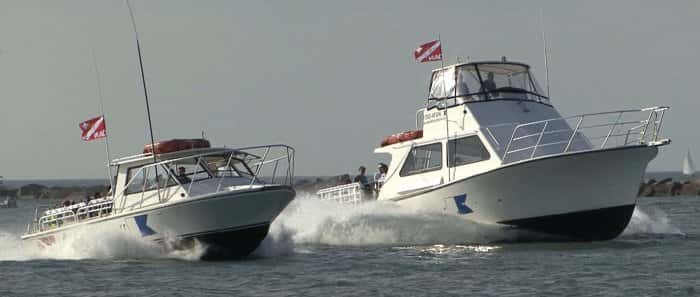
4 dive charters operate out of Wilmington, Wilmington, NC, with trips from $90 per person, covering sites like Rosin Wreck, 18 Fathom Wreck, 23 Mile Ledge. Every listing is aggregated from the operator or their booking platform — compare here, then book at the source with no fees from us.
Diving in Wilmington
Wilmington is the jump-off for some of the best wreck diving on the U.S. East Coast. The Gulf Stream swings close to the Cape Fear coast, bathing a shelf full of WWII casualties, artificial reefs, and fossil ledges in warm blue water — and bringing the sand tiger sharks that made North Carolina wreck diving famous. Charters here run long offshore days for divers who want big animals and big steel, plus nearshore and river training for everyone else.
The signature dives
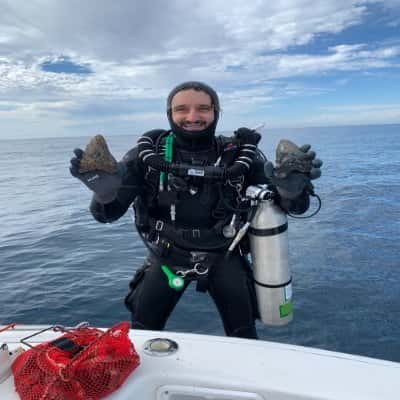
Sand tiger sharks schooling inside a Liberty ship is the postcard: wrecks like the Alexander Ramsey hold dense, docile aggregations that divers can settle in beside. Deeper ledges produce a different kind of trophy — the Megalodon Ledges are famous for fossilized shark teeth, including palm-sized megalodon teeth in the rubble. Farther out, the Frying Pan Tower area and Gulf Stream wrecks bring pelagic traffic: amberjack, barracuda, rays, sea turtles, and — for the lucky — passing hammerheads or a whale shark. Many of the best sites sit 20–40 miles out, so expect full-day, two-tank runs.
Conditions and season
This is a seasonal, offshore fishery of a dive scene: the prime window is roughly May through October, when the Gulf Stream pushes 75–82 °F water and 40–80 ft visibility over the outer wrecks. Inshore sites are cooler and greener, useful for training and checkout dives. Summer afternoon sea breezes and tropical systems are the main schedule risks; June and September often serve the calmest, clearest days. A 3 mm suit covers the offshore season.
Good to know
Most signature wrecks sit in the 90–130 ft range, so Advanced Open Water (or a supervised progression toward it) opens up the good stuff — several operators also run technical and shark-focused trips. Boats leave early to beat the sea breeze; motion-sensitive divers should plan accordingly for the long runs. Book summer weekends ahead — the fleet is small and the season is short.
Dive sites in Wilmington
Rosin Wreck 18 Fathom Wreck 23 Mile Ledge Alexander Ramsey (Liberty Ship) Anna's Ledge Brian Davis Wreck Cassimir City of Houston Dew's Ledge Dredge Wreck Esso Nashville Frying Pan Tower Hyde Hyde/Markham/Schoolhouse
Marine life you might see
barracuda sea turtle amberjack baitfish coral eagle ray green eel grey reef shark grouper hammerhead shark leopard shark lobster